

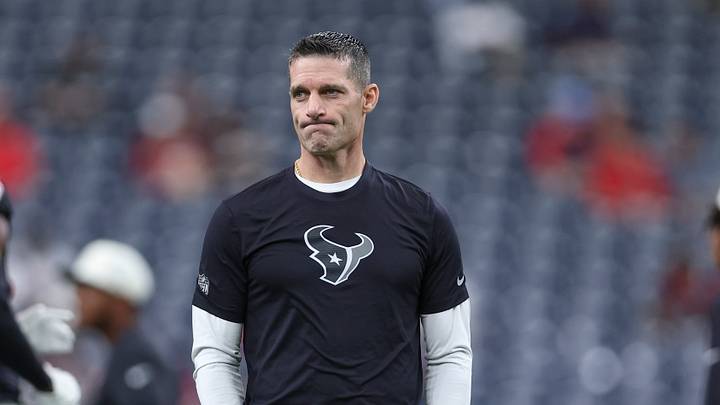
"I don't really have a good answer," sighed Houston Texans general manager Nick Caserio, as he fielded a question from a media member about the "up and down" nature of the team's offensive line through seven weeks of NFL play. In spite of making a concerted effort in the offseason to completely reshape the unit via trades, draft picks and free agent acquisitions, Houston's pass protectors still rank as a bottom-10 group in the league.
Even though the Texans have experienced some marginal success in pass protection (49% pass-block win-rate, 18th-ranked), sacks allowed (tied for 15th with 15) and quarterback pressure rate (34.1%, 13th-ranked) they crater when it comes to run-blocking (72% run-block win-rate, 22nd-ranked), which encompasses everything from getting running backs hit in the backfield, the ability to open rushing lanes, converting short-yardage opportunities and even goal line situations.
The reality is, the unit has lacked physicality, cohesiveness, finishing ability and situational awareness to go along with all the other concerns, which is not was Caserio and co. set out to accomplish at the conclusion of the 2025 postseason. The reality is, it's appearing like Caserio's attempt at rectifying a broken offensive infrastructure is trending toward failure for a seventh consecutive campaign.
Nick Caserio responds to question about why the Houston Texans still have issues across the offensive line
Caserio continued his sober explanation by expressing,
"You try to put the guys out there that we feel are the best and give them the opportunity. Sometimes it's a match up situation, like their guy is better than our guy. Ok, is it, can we do something a little bit different? Again, we've done a decent job at pass protection this season. Run-blocking has been more about finishing more than anything else. If there's a change to be made, we'll make it. If there's not then we'll see if we can make an adjustment somewhere else."
It truly is a mesmerizing situation to be in if you're Houston, as decisions like re-signing guard Ed Ingram, drafting guard/center Keylan Rutledge and signing free agents like tackle Braden Smith and guard Wyatt Teller were all executed with the goal in mind of being a more physical collective up front. Instead, Ingram is false starting to kill drives, Rutledge is struggling to stay in front of pass rushers and both Smith and Teller have either been injured or reduced to bench roles as a result of being beat out in training camp. That's about as big of an offseason whiff at one position as you can get for an NFL executive.
The chronic issues have resulted in multiple untimely sacks of Stroud in potential game-winning situations (week one against the Buffalo Bills), a bottom-six rushing unit (84.7 YPG) and yet more penalty problems for head coach DeMeco Ryans to have to answer for (contributing toward a team total of 58 through seven weeks).
At this juncture, many fans and media covers who cover the team no longer have an appetite to hear from Caserio on why his methods in building this specific unit are still ineffective. The fact is, it's another year of unfulfilled expectations and wondering about where this team goes from here?
It is very telling though, that the usually wordy Caserio could only utter, "I don't really have a good answer," at the beginning of his response. At this point, that's probably the best—and most accurate—answer the seventh-year decision maker could offer at the moment.
 Add us as a preferred source on Google